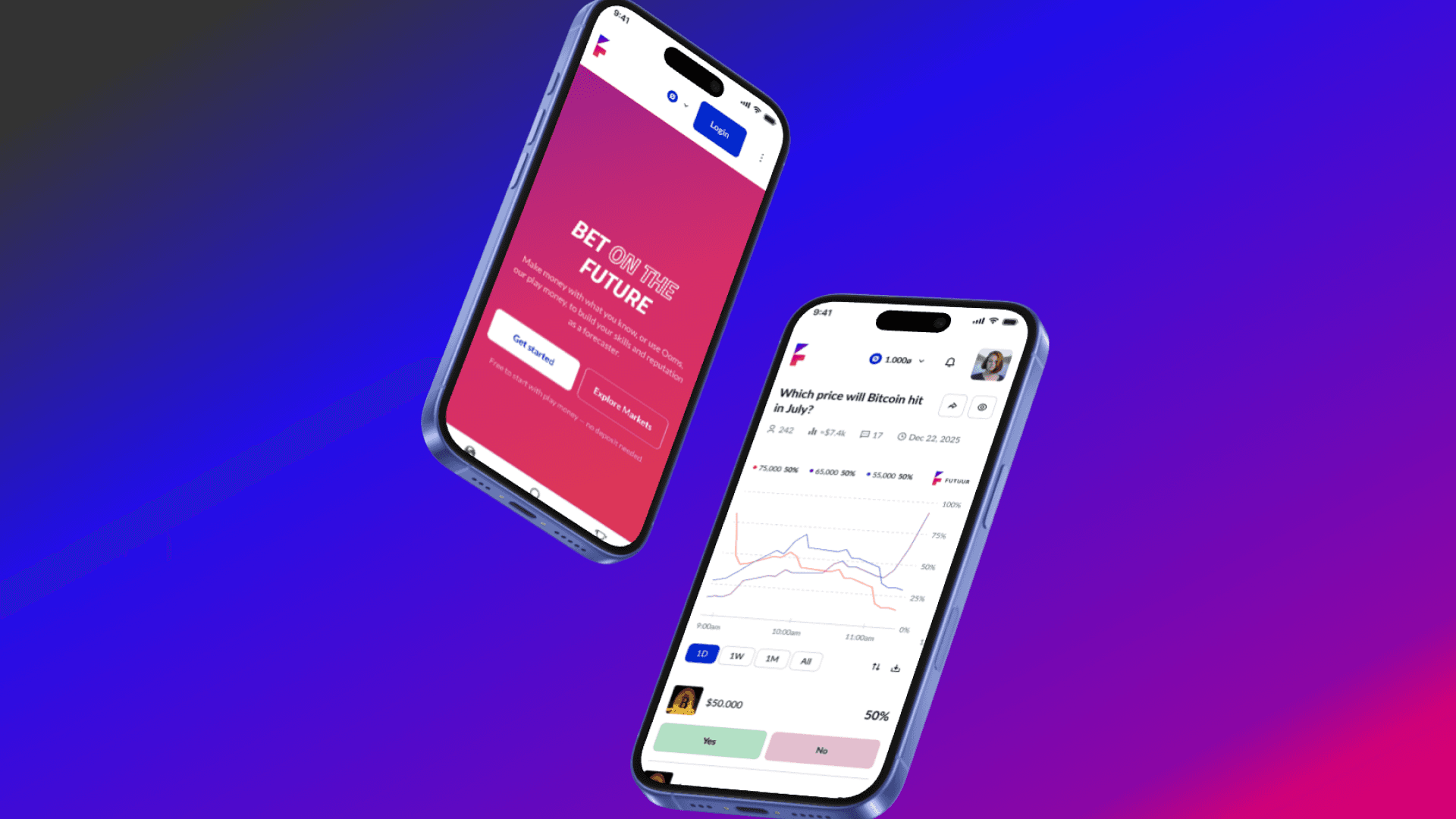
Nobody could find the market they wanted.
A discovery system redesign that took Futuur from thousands of buried prediction markets to a product people could actually navigate — and measurably stayed on.
"I wish you had more markets about what I like."
Users said this constantly, but the problem was never a lack of markets. As Futuur scaled to thousands of them, that contradiction pointed to a broken discovery layer, not a content gap.
Improving the personalized recommendation system wasn't within reach at the time, so the approach was to fix what was actually costing users the most. The moves that eased real pain without demanding heavy technical investment.
People either know exactly what they want, or need to be shown something they didn't.
Findability
Intentional search — input, suggestions, results, filters. Weak defaults and low relevance made it slow and frustrating.
Discoverability
Passive surfaces — feed, categories, weekly email, portfolio, leaderboard. Each one nudges users toward markets they never searched for.
Five surfaces. Five hypotheses. Five shipped fixes.
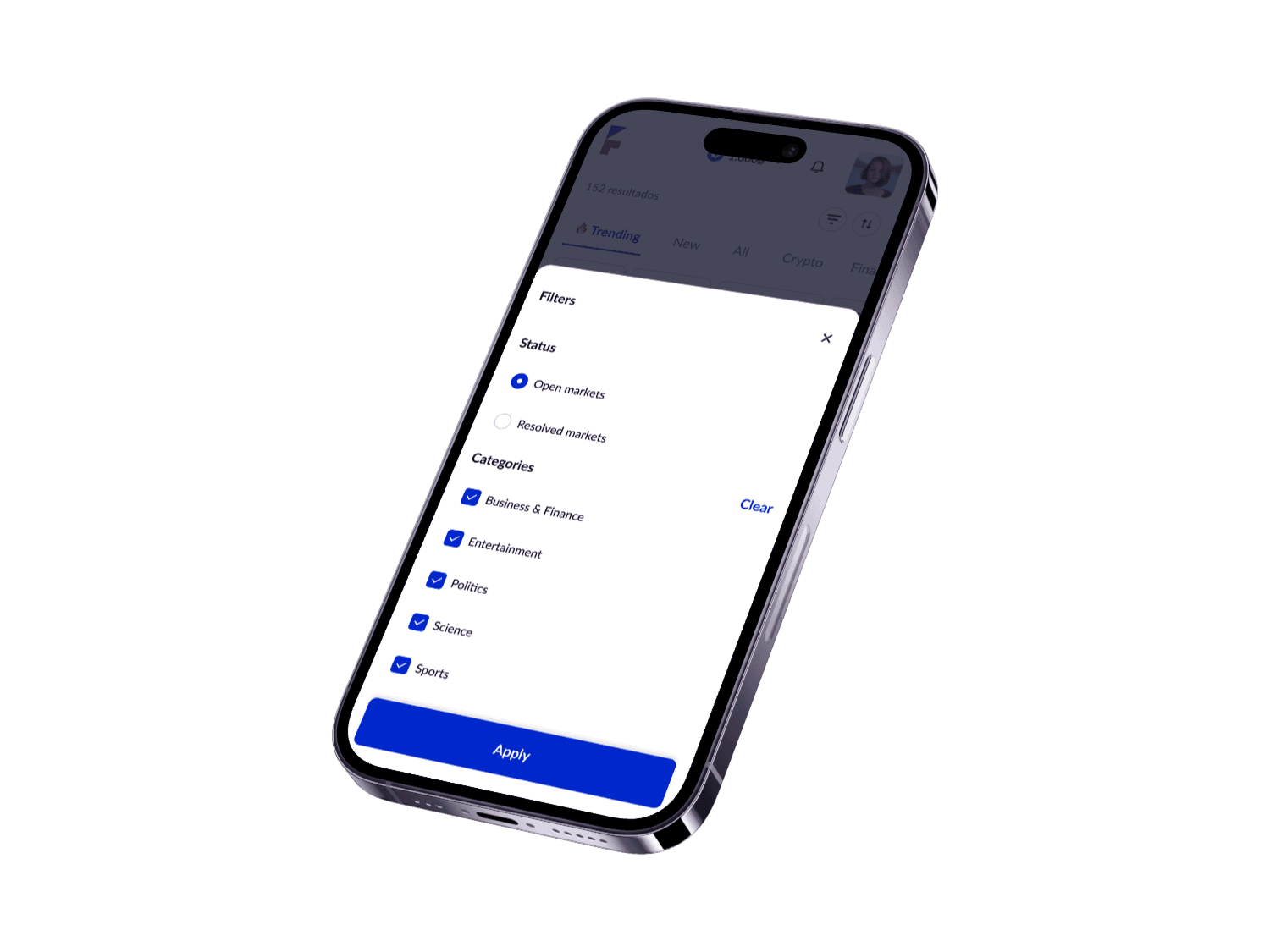
Let people narrow the flood themselves.
Shipped the most-requested filters from interviews so users could cut thousands of markets down to what mattered to them.
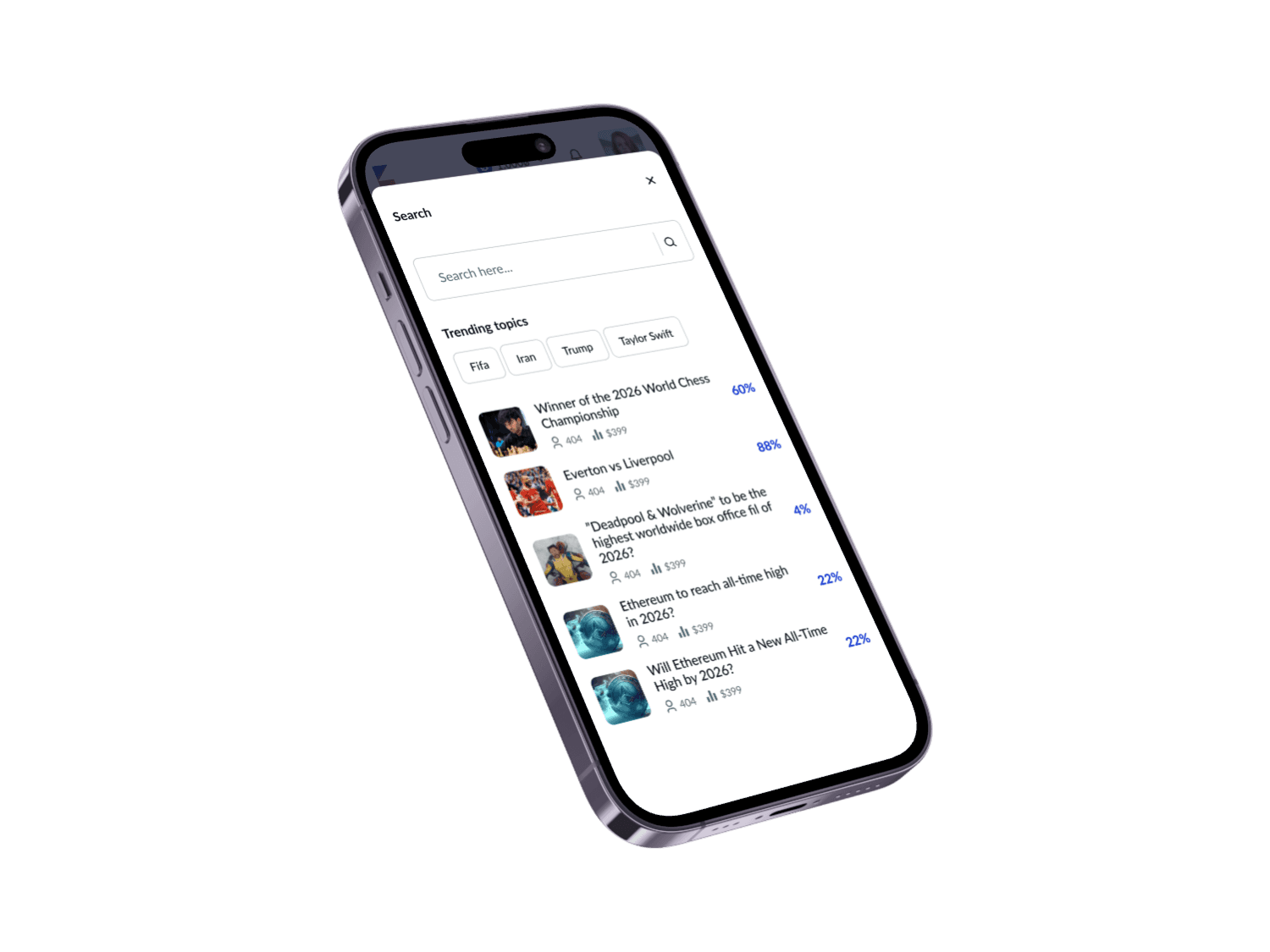
Show something useful before they even type.
Default suggestions based on behavior, hot topics and categories cut time-to-find dramatically.
Rebuilt the map.
Redesigned the information architecture with up to three layers of categories visible at once — the single biggest lever we pulled.
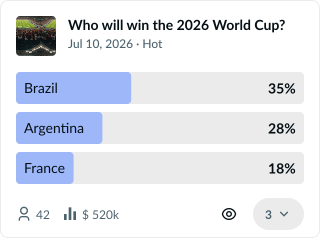
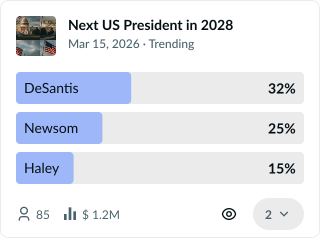
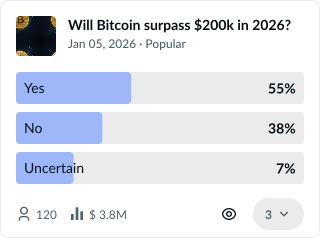
Smaller cards, more content per scroll.
Simplified card design kept the essentials, showed more markets per screen, and loaded faster.
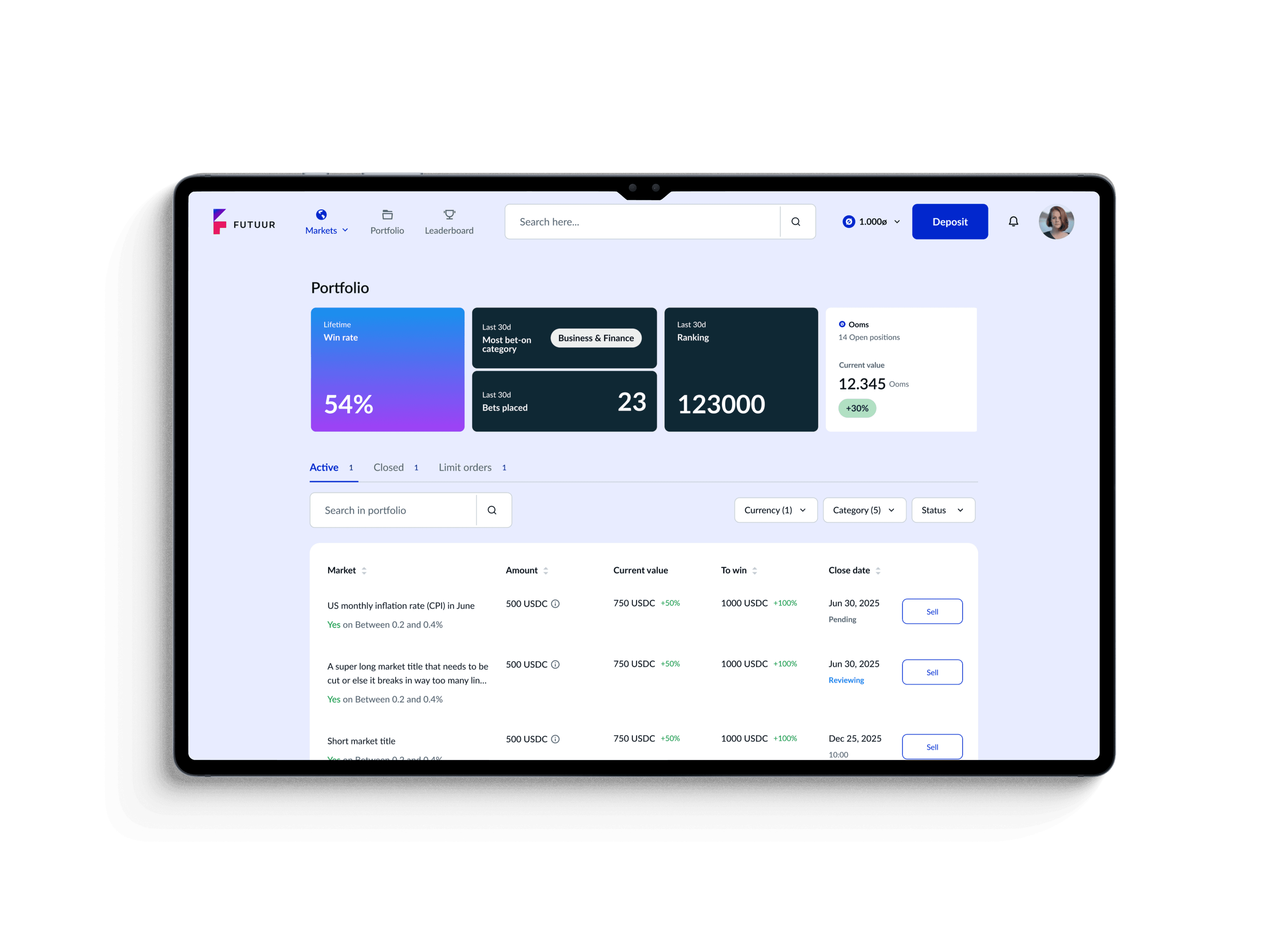
Discovery isn't only about the new.
Keeping track of existing positions matters just as much — the portfolio was rebuilt around what users actually needed to see.
Discovery isn't one feature — it's a system where intentional search and passive surfaces serve completely different moments. Small fixes across that whole system compound into outsized results.
Deferring the personalized recommendation engine, in favor of these lower-cost fixes, improved the metrics that mattered most while preserving the technical capacity to focus on the more critical problems.